The Role of Central Banks in Forex
If you're starting your Forex trading journey, you've probably heard traders talking about the Federal Reserve, the European Central Bank, or interest rate announcements. But why are these institutions so important?
Understanding the role of central banks in Forex is one of the most valuable lessons for beginner traders. Central banks don't trade to make profits. Instead, they manage a country's economy by controlling inflation, supporting employment, and maintaining financial stability. Every decision they make can influence currency prices across the global Forex market.
Learning how central banks affect exchange rates can help traders understand why markets move and make more informed trading decisions.
What Are Central Banks?
A central bank is a government-owned financial institution responsible for managing a country's money supply and monetary policy.
Unlike commercial banks that serve individuals and businesses, central banks oversee the nation's financial system.
Some of the world's most influential central banks include:
-
Federal Reserve (United States)
-
European Central Bank (Eurozone)
-
Bank of England (United Kingdom)
-
Bank of Japan (Japan)
Their decisions directly affect the currencies traded every day in the Forex market.
The Main Responsibilities of Central Banks
Central banks work to achieve several important economic objectives.
Maintain Price Stability
One of their biggest responsibilities is controlling inflation so that the purchasing power of money remains stable.
Support Economic Growth
When economies slow down, central banks may introduce policies that encourage borrowing, investment, and business activity.
Maintain Financial Stability
Central banks help ensure that financial institutions operate safely and can respond during periods of financial uncertainty.
These responsibilities explain why the role of central banks in Forex is closely watched by traders around the world.
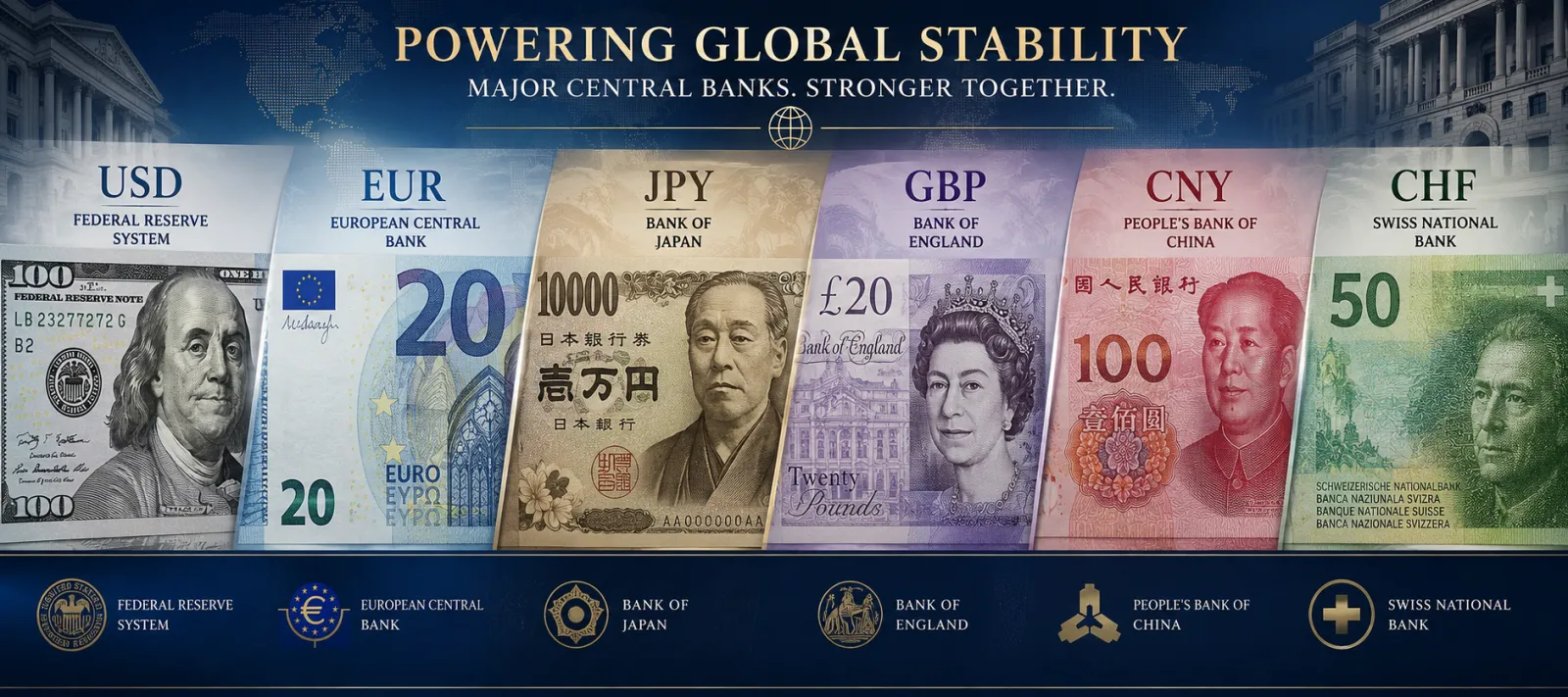
Central bank policies heavily influence global currency movements, making fundamental analysis a vital part of trading. To see how fundamental analysis connects with chart reading and risk control, consult our complete guide to forex trading.
How Central Banks Influence Forex Markets
Several policy tools allow central banks to influence currency values.
Interest Rates
Interest rates are one of the strongest drivers of currency prices.
Generally:
-
Higher interest rates attract investors seeking better returns.
-
Increased demand often strengthens the currency.
-
Lower interest rates can reduce demand and weaken the currency.
For example, when the U.S. Federal Reserve increases interest rates, the US Dollar often becomes more attractive to global investors.
Monetary Policy
Central banks adjust monetary policy depending on economic conditions.
Expansionary policies aim to stimulate economic activity, while tighter policies help control inflation.
These policy decisions often create long-term trends in the Forex market.
Central Bank Communication
Markets also react to speeches, press conferences, and policy statements.
Even before official decisions are announced, traders closely monitor comments made by central bank officials because expectations can influence currency prices.
Interest Rates and Currency Prices
Understanding interest rates is essential for anyone learning Forex.
When one country's interest rate is higher than another's:
-
Investors may move funds into that country's currency.
-
Demand increases.
-
The currency often appreciates.
When the opposite happens, currencies may weaken.
This relationship explains why professional traders always monitor central bank meetings.
Quantitative Easing Explained
Sometimes lowering interest rates alone is not enough.
Central banks may introduce Quantitative Easing (QE).
During QE:
-
New money is added into the economy.
-
Government bonds are purchased.
-
Money supply increases.
-
Currency values may weaken over time.
When QE ends or policies become tighter, currencies can strengthen again.
Central Bank Decisions and Market Volatility
Major announcements from central banks often create sharp price movements.
Examples include:
-
Interest rate decisions
-
Inflation reports
-
Monetary policy statements
-
Press conferences
During these events, currency pairs may experience significant volatility within minutes.
Many experienced traders wait until markets settle before entering new positions.
Comparing Major Central Banks
| Central Bank | Currency | Main Focus |
| Federal Reserve | USD | Inflation & Employment |
| European Central Bank | EUR | Price Stability |
| Bank of England | GBP | Inflation Control |
| Bank of Japan | JPY | Economic Growth & Stability |
Understanding these institutions helps traders interpret market movements more effectively.
Why Traders Should Follow Central Banks
Every Forex trader should monitor central bank activities because they influence long-term market direction.
Benefits include:
-
Better understanding of market trends
-
Improved risk management
-
More informed trading decisions
-
Better preparation before major announcements
Learning the role of central banks in Forex helps traders avoid unexpected market surprises.
Why Choose Zylostar for Forex Trading Education?
At Zylostar, we believe that successful trading begins with proper education.
Our training programs help students understand:
-
Forex market fundamentals
-
Technical analysis
-
Fundamental analysis
-
Risk management
-
Trading psychology
-
Economic events and central bank policies
Whether you're completely new to trading or looking to strengthen your market knowledge, our expert-led programs provide practical learning designed for real market conditions.
You may also be interested in:
Conclusion
Understanding the role of central banks in Forex is an important step toward becoming a more informed trader. Interest rates, monetary policy, and economic decisions all influence currency prices and shape long-term market trends.
Rather than reacting to sudden market movements, traders who understand central bank policies can better interpret why currencies rise or fall. Combining this knowledge with technical analysis and effective risk management creates a stronger foundation for successful trading.
At Zylostar, we help aspiring traders build this knowledge through structured Forex education and practical market learning.
Frequently Asked Questions (FAQs)
What is the role of central banks in Forex trading?
Central banks manage monetary policy, interest rates, and inflation, all of which significantly influence currency values in the Forex market.
Why do interest rate decisions affect currency prices?
Higher interest rates generally attract investors, increasing demand for a currency, while lower rates may reduce demand and weaken it.
Which central banks have the greatest impact on Forex markets?
The Federal Reserve, European Central Bank, Bank of England, and Bank of Japan are among the most influential institutions in global currency markets.
What is Quantitative Easing in Forex?
Quantitative Easing is a monetary policy where central banks purchase financial assets to increase money supply and stimulate economic activity, often affecting currency values.
Should beginners trade during central bank announcements?
Beginners are generally advised to wait until market volatility decreases before opening new positions after major announcements.
How can I learn more about fundamental analysis in Forex?
Joining a professional Forex education program like Zylostar can help you understand central bank policies, economic indicators, and market analysis through structured learning.
Author: ZYLOSTAR | Category: Education | Date: June 30, 2026 | Views: 341